
- Home
- Ladder Cable Tray in India
Top Best Ladder Cable Tray Manufacturers in India 2026|Trusted Ladder Cable Tray Manufacturers-Pratik Cabletray India
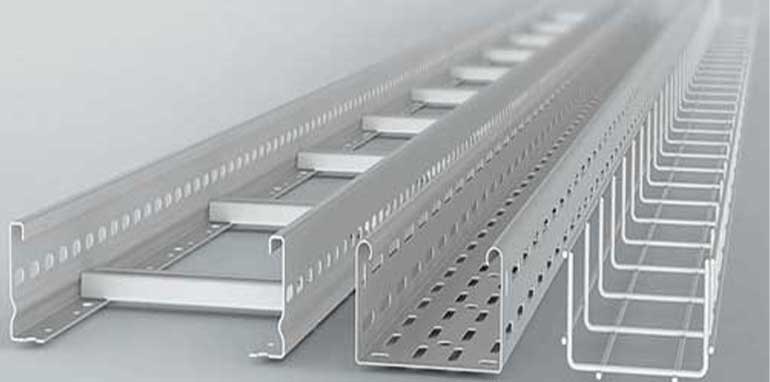


Pratik Cabletray Private Limited is leading Ladder Cable Tray Manufacturers, Suppliers and Exporters in India. Ladder Cable Tray is a widely used cable management solution designed to support, route, organize, and protect electrical and power cables in industrial, commercial, infrastructure, and utility installations. Its ladder-like construction consists of two longitudinal side rails connected by regularly spaced rungs, creating an open structure that allows ventilation and convenient cable access.
For projects involving heavy power cables, long cable runs, and installations where heat dissipation and accessibility are important, ladder cable trays provide a practical cable-support arrangement. They are available in different materials, dimensions, finishes, load capacities, and configurations to suit project-specific requirements.
What Is a Ladder Cable Tray and Why Does It Matter?
A Ladder Cable Tray is an open cable support system made from two parallel side rails joined by horizontal rungs. The rungs provide support for cables while maintaining open spaces between them, allowing air circulation and making cable installation, inspection, and maintenance easier.
Ladder type cable trays are particularly suitable for power distribution systems and heavy-duty cable installations because their open construction provides ventilation around cables. They can also be configured for different widths, heights, thicknesses, rung spacing, finishes, and support arrangements according to project requirements.
Unlike enclosed cable routing systems, ladder trays provide easy access to cables from above. This can be useful when cables need to be inspected, replaced, extended, or rearranged during the operational life of an installation.
The Origin and Core Design of Ladder Cable Tray
The ladder cable tray gets its name from its ladder-like appearance. Its basic construction uses longitudinal side rails connected by transverse rungs at regular intervals.
The open framework provides a combination of cable support, ventilation, accessibility, and organized routing. Depending on the application, ladder trays can be manufactured from materials such as mild steel, galvanized steel, stainless steel, aluminium, or other project-specified materials.
Key Features and Capabilities of Ladder Cable Tray
As Ladder Cable Tray Manufacturers in India, our products provide several Features including consistent quality, smooth finish, and long service life
- Open Ladder-Type Construction The open structure consists of side rails and horizontal rungs, providing convenient cable placement and accessibility.
- Efficient Cable Ventilation The open design allows airflow around cables, helping reduce heat accumulation compared with more enclosed cable-routing arrangements.
- Heavy-Duty Cable Support Ladder trays can be designed for installations carrying substantial cable loads, with load performance depending on factors such as material, tray dimensions, thickness, support span, and installation configuration.
- Easy Cable Installation Cables can be positioned directly onto the rungs, while cable ties or suitable fixing methods can be used to organize them.
- Easy Inspection and MaintenanceThe open structure provides access to cables, making visual inspection, identification, maintenance, and cable replacement more convenient.
- Multiple Material OptionsDepending on environmental and project requirements, ladder cable trays can be manufactured from galvanized steel, mild steel, stainless steel, aluminium, or other specified materials.
- Different Surface FinishesCommon finishes include pre-galvanized, hot-dip galvanized, powder-coated, and painted finishes, depending on the material and required corrosion protection.
- Custom DimensionsManufacturers can supply ladder trays in different widths, heights, thicknesses, lengths, and rung configurations according to project requirements.
- Accessories and FittingsLadder cable tray systems can incorporate fittings such as bends, tees, reducers, crosses, coupler plates, and other accessories required for changes in cable-routing direction.
- Suitable for Long Cable RunsThe structural configuration of ladder trays makes them suitable for many long cable-routing applications, particularly in industrial and power-related installations.
Ladder Cable Tray Technical Specifications
As a trusted Ladder Cable Tray Suppliers in India, we serve businesses across various industries that meet professional visual communication requirements.
| Specification | Typical Options / Range | Purpose |
|---|---|---|
| Tray Type | Ladder Type Cable Tray | Cable routing and support |
| Material | MS, GI / Pre-Galvanized Steel, SS, Aluminium | Based on application |
| Width | 50 – 1200 mm+ | Selected according to cable quantity |
| Side Rail Height | 40 – 150 mm | Provides structural support |
| Thickness | Approx. 1.2 – 3.0 mm+ | Selected according to load and span |
| Rung Spacing | Approx. 150 – 300 mm | Provides cable support |
| Standard Length | Approx. 2.5 – 3.0 m | Simplifies transportation and installation |
| Finish | Pre-Galvanized, HDG, Powder Coated, Painted | Corrosion and surface protection |
| Load Rating | Light, Medium, Heavy Duty | Depends on design and support span |
| Accessories | Bends, Tees, Crosses, Reducers, Couplers | Routing flexibility |
Who Should Use Ladder Cable Tray?
As Ladder Cable Tray Manufacturers in India, our all types are used in various types of industrial sectors such as:
Ideal Users
- Industrial Plants: For routing power and control cables throughout manufacturing facilities.
- Power Generation Projects: For organizing and supporting electrical cables in power-related installations.
- Electrical Contractors: For structured cable management during commercial and industrial electrical installations.
- EPC Contractors: For customized cable-support systems based on project drawings and specifications.
- Infrastructure Projects: For cable routing in large-scale infrastructure and utility installations.
- Commercial Buildings: For organized electrical and communication cable pathways.
- Data and Communication Infrastructure: For selected cable-routing applications where an open support arrangement is appropriate.
Common Applications
- Power distribution systems
- Electrical substations
- Manufacturing plants
- Industrial facilities
- Oil and gas installations
- Chemical plants
- Commercial buildings
- Data centres and IT infrastructure
- Warehouses and utility areas
- Infrastructure and transportation projects
Advantages and Limitations of Ladder Cable Tray
As Ladder Cable Trays Exporters in India provide efficient cable support, excellent ventilation, easy installation, and convenient maintenance, while their open construction may require additional protection in certain outdoor or demanding environments.
What Works Well
- Good ventilation: The open construction allows air movement around cables.
- Heavy cable support: Suitable designs can accommodate substantial cable loads.
- Easy installation: Cables can be placed and arranged directly on the rungs.
- Easy maintenance: Open access makes cable inspection and modification convenient.
- Flexible configuration: Different widths, heights, materials, finishes, and fittings can be specified.
- Organized cable routing: Helps create defined pathways for electrical cables.
Potential Limitations
- Limited protection from external exposure: The open design does not provide the same enclosure as a fully covered cable-management system.
- Additional covers may be required: Outdoor, dusty, or specific project environments may require covers or additional protection.
- Cable spacing requires planning: Proper cable arrangement is important for ventilation and installation requirements.
- Material selection is important: Highly corrosive environments may require stainless steel, suitable galvanization, or another corrosion-resistant material.
- Load capacity is application-dependent: Tray dimensions alone do not determine load capacity; support span, material, thickness, and installation conditions must also be considered.
How to Get Started with Ladder Cable Tray
Step 1: Check Prerequisites and Requirements
Before selecting a ladder cable tray, determine: • Number and type of cables • Cable diameter and weight • Required tray width • Required side-rail height • Support span • Indoor or outdoor installation • Environmental and corrosion conditions • Required material and finish • Required fittings and accessories • Applicable project specifications and standardsStep 2: Select the Appropriate Tray Design
Choose the material, width, height, thickness, rung spacing, finish, and load classification according to the project requirements.
For example, galvanized steel may be considered for many general industrial applications, while stainless steel can be considered for environments requiring greater corrosion resistance.
Step 3: Plan the Cable Routing
Prepare the cable route and determine where straight sections, horizontal bends, vertical bends, tees, crosses, reducers, and couplers are required.
Step 4: Install the Tray System
Install the ladder cable tray on the specified support arrangement and ensure that joints, supports, bends, and accessories are properly aligned and secured.
Step 5: Arrange and Secure the Cables
Place cables systematically on the tray and use suitable cable-management methods to maintain an organized arrangement. Cable separation and installation practices should follow the relevant project and electrical requirements.
Step 6: Inspect the Completed Installation
Check the installation for alignment, support spacing, mechanical stability, cable arrangement, joints, grounding or bonding requirements where applicable, and any required protective covers.
Pratik Cabletray Private Limited is leading Ladder Cable Tray Manufacturers, Suppliers and Exporters in India. Weighing the unmatched load-bearing strength and superior ventilation against the lack of a solid bottom shield, the ladder cable tray remains the gold standard for heavy electrical power distribution.
If you are running high-voltage power cables in an industrial facility or a high-capacity commercial build where airflow and long support spans matter most, this is the exact system you need. Explore our certified range of heavy-duty Ladder Cable Tray Systems for reliable and efficient cable management in industrial projects.
FAQs:
Yes. Ladder cable trays are commonly used for heavy power-cable installations because their structural design can provide substantial cable support. However, the actual load capacity must be confirmed using the manufacturer's load tables and the specified support span.
A ladder cable tray uses two side rails connected by regularly spaced rungs, creating an open ladder-like structure. Other cable tray designs, such as perforated trays, generally have a continuous base with ventilation openings.
Common materials include mild steel, galvanized or pre-galvanized steel, stainless steel, and aluminium. Material selection depends on load requirements, environmental conditions, corrosion resistance, and project specifications.
Yes. Ladder cable trays can be manufactured or configured with different widths, heights, thicknesses, lengths, rung spacing, materials, finishes, and fittings according to project requirements.
They are commonly used in power distribution systems, substations, manufacturing plants, industrial facilities, commercial buildings, infrastructure projects, and other installations requiring organized cable support.